Six ways to turn everyday clothes into a live action roleplay costume
 Save
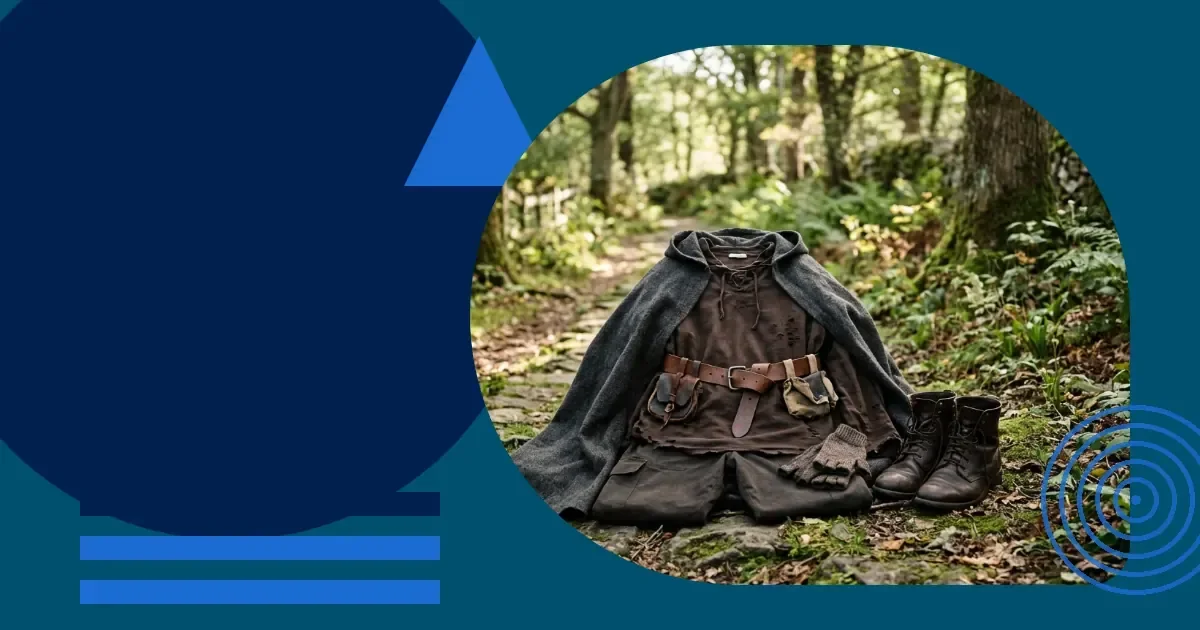
You can build a live action roleplay costume from clothes you already own. Charity shops, your wardrobe and a few fabric choices give you everything needed for a first event. Fantastical Quests covers practical ways to prepare kit without specialist suppliers or sewing skills.
Start with a base layer that hides modern details
Plain trousers and a long-sleeved top form the foundation. Dark colours work for most settings because logos, zips and synthetic textures disappear against them. A black or brown base lets you add period-appropriate pieces over the top without the underlayer breaking immersion.
Jeans become medieval trousers when boots cover the lower leg and a tunic falls below the hip. Leggings suit fantasy or post-apocalyptic roles. Avoid visible branding, reflective strips and sportswear cuts — a plain tracksuit bottom reads neutral under a long garment, whereas joggers with side panels do not.
Check the fabric weight for outdoor events
Cotton and wool keep you comfortable across a long weekend. Polyester base layers trap sweat during physical scenes and turn cold overnight. Feel the fabric before you pack it — if it does not breathe in your hand, it will not breathe on site.
Layer with oversized shirts, waistcoats and long cardigans
A shirt several sizes too large becomes a tunic when you belt it at the waist. Tuck modern fastenings inside or replace visible buttons with cord ties. Linen and cotton shirts from charity shops often have enough fabric to drape well, and the looser fit hides the shape of the clothes beneath.
Waistcoats add structure without sewing. Leather-effect or plain wool styles suit historical and fantasy roles. A long cardigan becomes a robe when you remove any plastic toggles and wear it open or tied with fabric strips. Knitted cardigans work for rural or scholarly characters; heavier weaves suggest wealth or status.
Belts and sashes change the silhouette
A wide belt pulled tight over a loose shirt creates a medieval or fantasy outline. Fabric sashes — torn bedsheets, curtain tiebacks, long scarves — wrap twice around the waist and tie at the side. The belt or sash hides the shirt hem and lets you tuck in pouches, props or rolled fabric to suggest a working character.
Use fabric to cover, wrap and drape
Cheap fabric by the metre — cotton, felt, muslin — turns into cloaks, shawls, tabards and head coverings without a single stitch. A rectangle of fabric with a slit for your head becomes a tabard. Fold the fabric in half, cut a head-sized opening along the fold, and let it hang front and back.
Cloaks need a fastening at the neck. Safety pins work for a first event; brooches or cord loops sewn to the corners work long-term. A blanket or thick curtain gives you a heavy cloak that looks intentional. Lighter fabrics — old bedsheets, remnants from fabric shops — make liners, sashes, bandages and decoration.
- Measure a rectangle of fabric twice your arm span and half your height for a full cloak that does not drag on the ground.
- Fold the fabric in half lengthwise and drape it across your shoulders to check the weight and fall before you cut or fasten anything.
- Pin or tie the fabric at the collarbone on both sides so it stays in place when you move quickly.
- Trim any loose threads and iron out creases so the fabric reads as a garment rather than repurposed material.
Add texture with scarves, gloves and simple accessories
Scarves wrapped around the head, neck or waist break up plain colours and add detail. Patterned scarves suit travellers or traders; plain ones work for most roles. Fingerless gloves — cut from old socks or bought cheaply — suggest a working character and hide modern hand jewellery.
Leather belts, fabric pouches and wooden beads are inexpensive and reusable across different characters. A pouch on your belt holds personal items and keeps your hands free during scenes. Avoid plastic fastenings, printed logos and anything that catches the light unnaturally.
Footwear matters more than you expect
Boots cover modern trainer soles and suit most settings. Leather or suede boots work well; walking boots in brown or black are acceptable when they lack bright logos. Avoid white soles, neon laces and visible air pockets. Ankle boots need long trousers or fabric wraps to hide the gap between boot and hem.
Colour choices that work across roles and settings
Earth tones — brown, green, grey, dark red — fit historical and fantasy settings without research. Black works for nearly every character type. Bright colours need context: a rich merchant, a noble, a priest. If you are building your first costume, stick to two or three colours and avoid patterns unless they suit the character.
| Colour palette | Reads as | Works well for |
|---|---|---|
| Brown, beige, off-white | Practical, working class | Farmers, labourers, travellers |
| Black, grey, dark green | Neutral, adaptable | Mercenaries, rogues, rangers |
| Deep red, purple, navy | Status or ceremony | Nobles, officials, priests |
| Mixed earth tones | Lived-in, layered | Survivors, outcasts, wanderers |
Bright white and pastel shades look modern unless the setting supports them. Check the game brief before you commit to a colour — some systems assign faction colours, and you do not want to signal allegiance by accident.
Adjust charity shop finds to remove modern features
Charity shops stock oversized shirts, wool jumpers, long skirts and waistcoats at low cost. Look for natural fabrics, plain colours and simple cuts. Remove plastic buttons and replace them with wooden ones or cord loops. Unpick visible labels and seams that do not sit flat.
A long skirt over trousers creates volume and hides modern cuts. Wool jumpers with damaged cuffs become sleeveless tunics when you cut the arms off and hem the edges with fabric glue. Denim jackets lose their modernity when you cover the metal studs with fabric patches or remove them entirely.
If you are planning a character across several events, developing the role over time means your costume can grow in stages rather than arriving complete on the first day. You add pieces as the character earns them or as your budget allows.
Work with what the character needs, not what looks impressive
A believable character wears what makes sense for their background and role. A farmer does not need embroidery; a guard does not need flowing sleeves. If your character works outdoors, the costume should look hard-wearing. If they are wealthy, one well-chosen piece — a good belt, a lined cloak — says more than layers of cheap decoration.
Start with the character's function and build outward. A healer carries pouches and wears practical layers. A scholar might have ink stains and worn cuffs. A soldier needs freedom of movement and durable fabric. When you know what the character does, the costume choices follow.
Keeping your costume functional between events means it is ready when you need it. Looking after the pieces properly extends their life and keeps them looking intentional rather than improvised.
Test the outfit at home before the event
Wear the full costume indoors for an hour. Sit down, reach overhead, crouch and walk quickly. Anything that pinches, slips or restricts movement will be worse on site. Adjust belts, re-pin fabric and swap out pieces that do not work.
Check that pockets and pouches are secure and that nothing will fall off during physical scenes. If you are wearing layers, make sure you can remove the outer ones quickly if you overheat. Comfort matters — you will be in this costume for hours, and discomfort breaks immersion faster than a visible zip.
This week: gather and try three pieces
You do not need the whole costume ready today. Start small and build confidence.
- Pull three plain items from your wardrobe — a long-sleeved top, dark trousers and a belt — and try them on together to see the base shape.
- Visit one charity shop and look for an oversized shirt or a length of fabric you can drape without cutting.
- Wear the outfit at home while you cook or clean, and notice what works and what needs adjusting before you add more pieces.
#Beginner tips #Costumes #DIY armour #Budgeting
Download PDF: Your everyday-clothes LARP costume checklist PDF, 29 KB
Further reading
Frequently asked questions
Can you make a LARP costume without sewing anything?
Yes. Fabric draped and pinned, belts, safety pins and fabric glue hold most costume pieces in place without stitching. Cloaks, tabards and wraps work as rectangles of cloth fastened at the shoulders or waist.
What clothes from charity shops work best for live action roleplay costumes?
Oversized plain shirts, wool jumpers, long skirts, waistcoats and leather belts are the most useful. Look for natural fabrics in earth tones and avoid visible branding or synthetic textures that look modern.
How do you hide modern details on everyday clothes for a LARP event?
Layer period-appropriate pieces over them, cover zips and logos with fabric or belts, and remove or replace plastic buttons. Dark base layers make modern details less visible, and boots or wraps hide trainer soles.